SDG #306 OTOFIX D1 Lite OBD-II Diagnostic Scan Tool (Autel)
The OTOFIX D1 Lite sits at the entry point of OTOFIX’s D1 range, and since OTOFIX is an Autel sub-brand (the housing even says “powered by Autel”), the software will feel immediately familiar to anyone who has used an Autel tablet. The hardware is a 7 inch Android 9 tablet at 1280x800, with USB-C charging, USB-C OTG, an SD slot, Wi-Fi 5, a rear camera with flash for before-and-after documentation, and a supplied Ethernet adapter that oddly is not covered in the manual. Vehicle communication happens over Bluetooth via a separate VCI dongle with its own built-in torch, a small touch that matters when you are feeling around under a dash for a hidden OBD-II port.
Testing is done on a Ford Mondeo 2.2 diesel, which shows how the tool behaves in practice rather than in a spec sheet. The auto scan walks every module on the available CAN buses and helpfully promotes modules with stored codes to the top of the list. Live data is where the tool earns its keep: door module turn signal PIDs are watched changing in real time to demonstrate how you would isolate a wiring or lamp fault from a module fault, and engine PIDs can be filtered, shown as a selected subset, then merged onto a graph. Refresh is roughly once per second, so it is a logic-level diagnostic aid rather than a scope replacement.
Service functions are unusually broad for the price, with around 30 resets including oil, TPMS, BMS, ABS brake bleeding, injector coding, headlight levelling and a static forced DPF regeneration. The key limitation is that the Lite drops bi-directional control, so cylinder cut tests and similar commanded actions require stepping up to the standard D1 at noticeably higher cost. For DIY owners and small workshops who mainly need codes, live data and service resets, the Lite covers most real jobs.
More Automotive Tools

SDG #370 XTool XT80W Wireless Diagnostic Scan Tool (OBD-II)
Hands-on with the XTool XT80W wireless OBD2 scan tool: topology scanning, live data graphing, DTC clearing and actuation tests on a real vehicle.
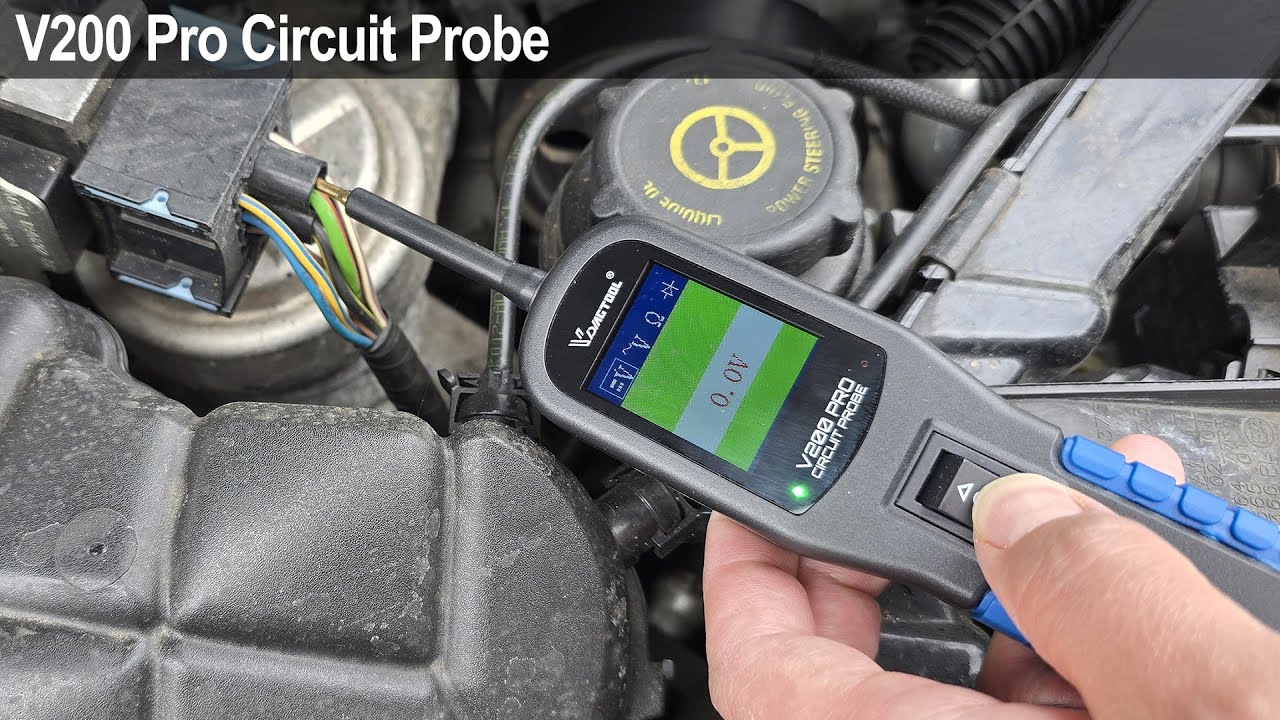
SDG #364 VDIAG V200 Pro Automotive Circuit Probe and Wire Tracer
Hands-on test of the VDIAG V200 Pro power probe and wire tracer: teardown, current limits, scope accuracy and finding a broken wire in seconds.

SDG #350 Kingbolen K7 Bi-Directional Diagnostic Scan Tool
Hands-on with the Kingbolen K7 bi-directional scan tool: full system health scan, live data graphing, actuation tests, coding and 3 years of updates.