SDG #201 Exploring AC LED driver failure modes
Mains-powered LED lighting has quietly become one of the most common sources of electronic failure in the home, and this episode digs into why. Rather than reviewing a single product, the focus is on the driver circuitry that sits behind the LEDs, the part that almost always dies first, and on the specific mechanisms that cause it to fail.
Several recurring themes come up. Electrolytic capacitors running hot inside sealed plastic bulb enclosures lose capacitance and rise in ESR, which shifts the operating point of the driver and can push current through the LEDs beyond their design limits. Capacitive dropper supplies, popular because they cost almost nothing, are particularly unforgiving: as the X-rated capacitor drifts down in value the output collapses, and when a series element fails short the LED string sees far more energy than it should. Series filament strings and series-wired emitters compound the problem, since one open die can take down the whole lamp or, worse, arc.
For anyone buying or specifying LED lighting, the practical takeaways are more useful than any single spec sheet. Thermal design matters more than the claimed lumen figure, drivers with proper constant current regulation outlast dropper-based designs, and non-isolated topologies bring genuine safety implications if you plan to open a fitting. The discussion also serves as a good primer for anyone attempting a repair, since knowing the likely failure mode narrows the fault-finding to a handful of components. It is a worthwhile watch if you have ever wondered why a lamp rated for tens of thousands of hours quit inside a year.
More Electronics Projects
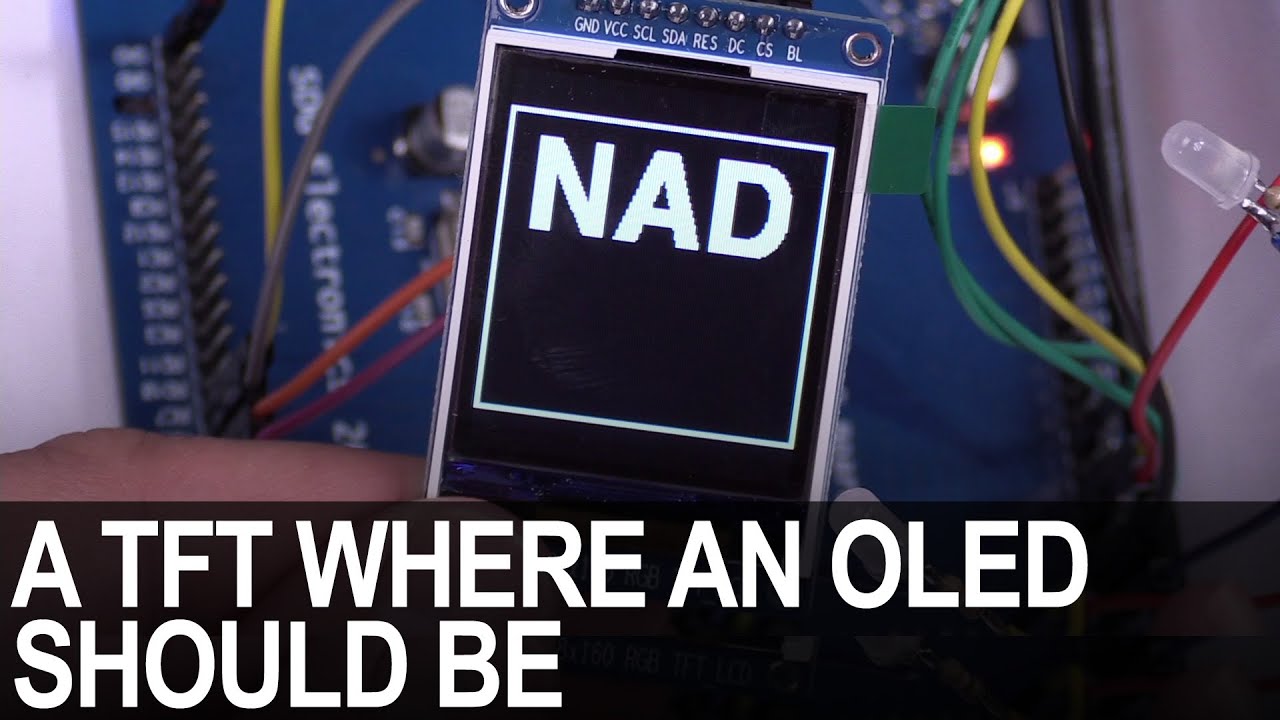
SDG #365 Reverse Engineering NAD D7050 OLED Replacement for IPS TFT
Decoding the NAD D7050's obsolete SSD1355 OLED protocol with a logic analyser, then driving an SSD1351 OLED and ST7735S IPS TFT as replacements.

SDG #360 Zero Crossing Detection and PCBWay 3D Prints
Testing PCBWay nylon PA12 and clear resin wall mounts for a Waveshare 4in ESP32-S3 touch dimmer, plus lower-power zero crossing detection options.

SDG #357 RGB Meteor Shower LEDs Build using ESP32 and WLED
Custom meteor shower Christmas lights built from WS2812 LED PCBs, ESP32 controllers running WLED, acrylic tubes and 3D printed weatherproof caps.