SDG #230 Custom AC LED Trailing Edge Dimmer Modules Revisited...
This episode returns to an ongoing in house project: a compact trailing edge AC dimmer module designed to drive modern LED lamps without the buzzing, flickering and dropout problems that plague cheap leading edge triac dimmers sold as “LED compatible”.
The key distinction explained here matters to anyone retrofitting dimmable LED bulbs. Leading edge dimmers chop the start of each mains half cycle, dumping a fast rising edge into the switch mode driver inside an LED lamp, which is exactly the kind of abuse those drivers handle worst. A trailing edge design instead conducts from the zero crossing and switches off partway through the half cycle, giving a much gentler waveform for the lamp’s input filter and typically far better low end behaviour and less audible noise. Achieving that requires a bidirectional solid state switch rather than a triac, since the device has to be turned off on command, so the module leans on MOSFETs plus gate drive and a zero cross reference for timing.
The revisit covers what changed since the earlier revision: board layout and packaging so the module can actually fit behind a wall plate, thermal headroom for the switching devices, snubbing and filtering to keep switching transients from radiating, and firmware side control of the dimming ramp and minimum brightness threshold. Bench testing focuses on the practical questions a buyer or builder cares about: does the dimming curve feel smooth, do cheap bulbs flicker or refuse to strike at low levels, and how much power is dissipated in the module at full load. It is a good case study in why mains dimming is genuinely hard, and why lamp compatibility varies so widely between brands.
More Electronics Projects
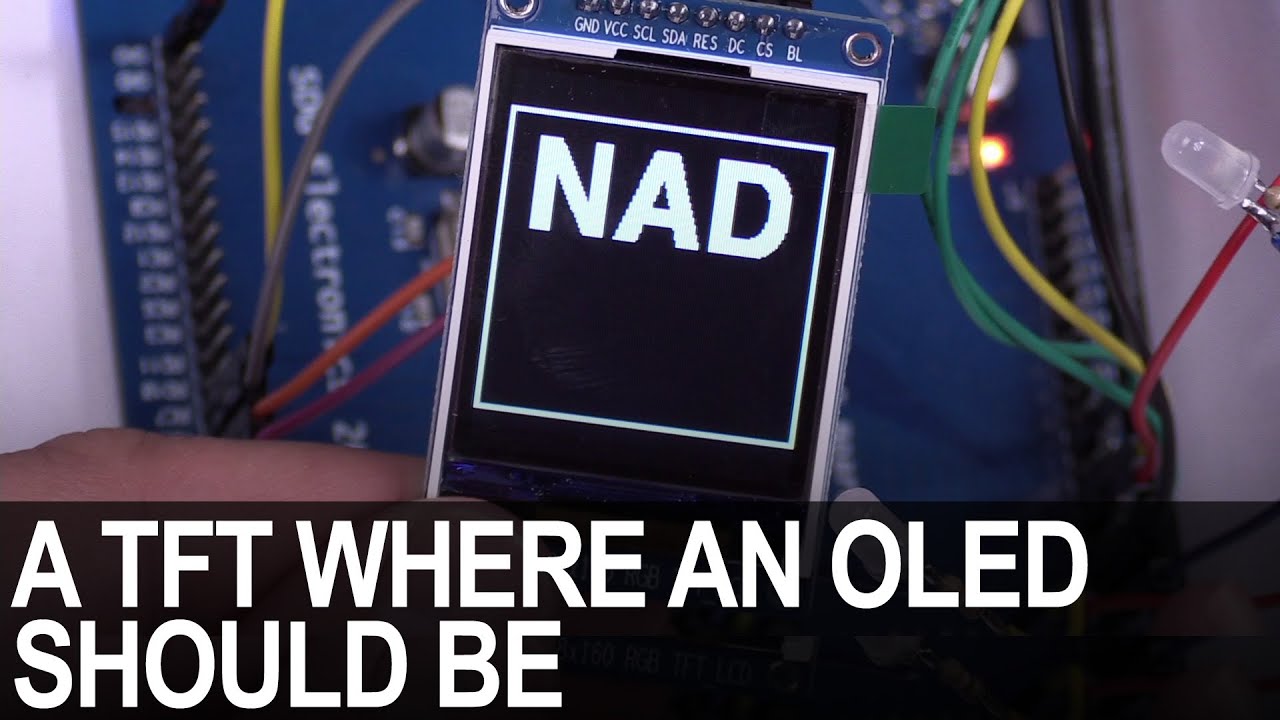
SDG #365 Reverse Engineering NAD D7050 OLED Replacement for IPS TFT
Decoding the NAD D7050's obsolete SSD1355 OLED protocol with a logic analyser, then driving an SSD1351 OLED and ST7735S IPS TFT as replacements.

SDG #360 Zero Crossing Detection and PCBWay 3D Prints
Testing PCBWay nylon PA12 and clear resin wall mounts for a Waveshare 4in ESP32-S3 touch dimmer, plus lower-power zero crossing detection options.

SDG #357 RGB Meteor Shower LEDs Build using ESP32 and WLED
Custom meteor shower Christmas lights built from WS2812 LED PCBs, ESP32 controllers running WLED, acrylic tubes and 3D printed weatherproof caps.