SDG #227 Does PCBs solder mask colour impact appearance of SMT LEDs?
Solder mask colour is usually treated as a purely cosmetic choice, but anyone laying out an LED indicator panel or a light bar has probably wondered whether a white board genuinely makes the LEDs look brighter, or whether black kills the output. This episode puts that question to a practical test rather than leaving it to forum folklore, using identical test boards ordered in the standard range of mask colours (white, black, green, red, blue and yellow) with the same SMT LED footprints on each.
The interesting part is separating two very different effects. One is genuine optical gain: light emitted sideways or downward from the LED package reflecting off the mask surface and adding to the perceived output. The other is contrast and perception, where a dark mask makes a lit LED look punchier simply because the surrounding surface is dim, while a white board raises the background brightness and can wash the effect out. There is also the diffuse glow around each part, which is what most people actually notice on a finished product.
For designers the takeaway is that mask colour is worth thinking about at the aesthetic level, particularly for front panel or exposed boards where the PCB is part of the visible design, but it is not a substitute for choosing the right LED, current setting or diffuser. Practical considerations still tend to dominate the decision: white mask makes silkscreen legibility awkward and shows flux residue and handling marks, black mask hides marks but runs hotter under strong lighting and can make rework harder to see under a microscope.
More Electronics Projects
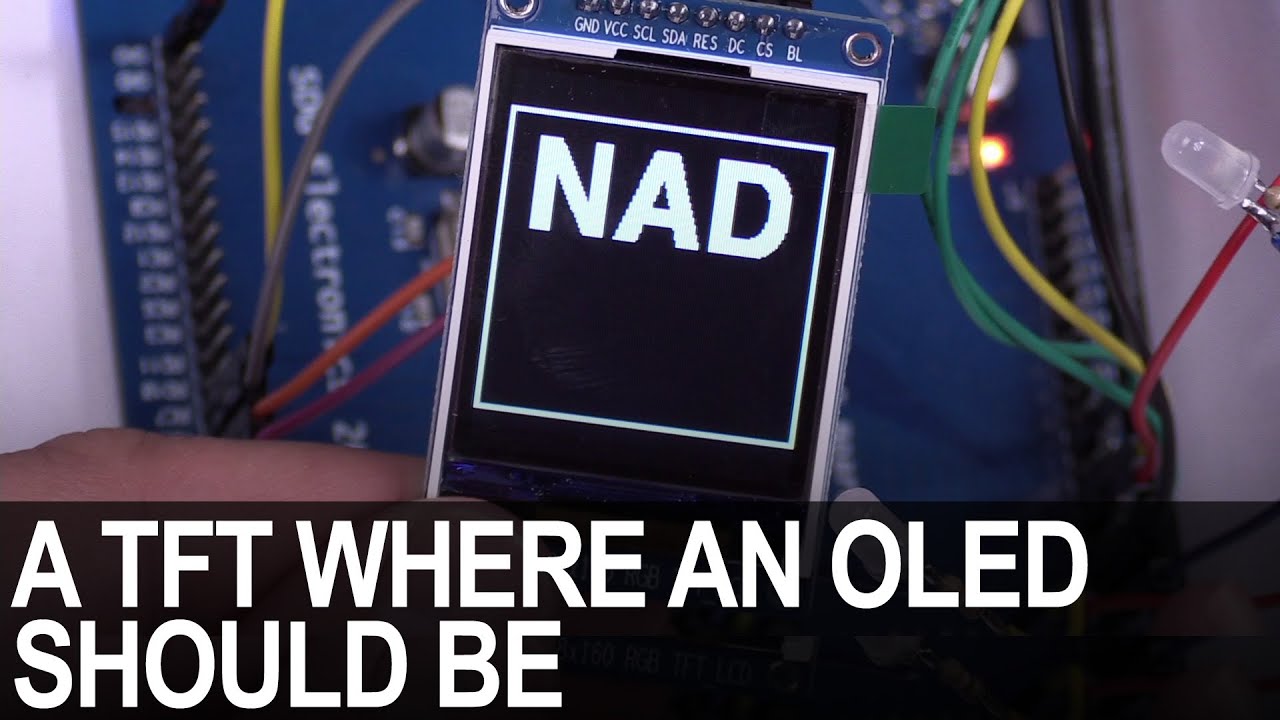
SDG #365 Reverse Engineering NAD D7050 OLED Replacement for IPS TFT
Decoding the NAD D7050's obsolete SSD1355 OLED protocol with a logic analyser, then driving an SSD1351 OLED and ST7735S IPS TFT as replacements.

SDG #360 Zero Crossing Detection and PCBWay 3D Prints
Testing PCBWay nylon PA12 and clear resin wall mounts for a Waveshare 4in ESP32-S3 touch dimmer, plus lower-power zero crossing detection options.

SDG #357 RGB Meteor Shower LEDs Build using ESP32 and WLED
Custom meteor shower Christmas lights built from WS2812 LED PCBs, ESP32 controllers running WLED, acrylic tubes and 3D printed weatherproof caps.