SDG #203 Final Assembly and Testing of the ESP32-based Aquarium Light (+Integration with Node Red)
This episode closes out the ESP32-based aquarium light project, moving from bare boards and loose LED strings to a finished fixture that runs unattended over the tank. The focus is on the practical side of building custom lighting hardware: mounting the LED channels to the heatsink profile so heat actually has somewhere to go, dressing the wiring so it survives a humid environment, sealing the enclosure without trapping heat, and confirming that the constant-current drive circuitry behaves as intended once everything is bolted together rather than sitting on the bench.
Testing covers the parts that matter for a light that runs every day. The channels are checked individually to verify that each colour group comes up at the expected current, dimming is exercised across the range to look for flicker and low-end dropout in the PWM control, and temperatures are monitored under sustained full output to see whether the passive cooling arrangement is adequate for continuous operation. Anyone building similar hardware will find the thermal and current-limiting observations the most transferable, since those are the two things that typically kill DIY high-power LED fixtures.
The software side ties the fixture into a wider home automation setup. With the ESP32 publishing and subscribing over MQTT, Node-RED handles scheduling, sunrise and sunset ramps and manual overrides through a dashboard, which is a far more flexible approach than the fixed timer built into commercial aquarium lights. It also demonstrates a reusable pattern: a small ESP32 controller board plus a broker plus Node-RED flows can drive almost any custom lighting or sensing project without writing a bespoke app.
More Electronics Projects
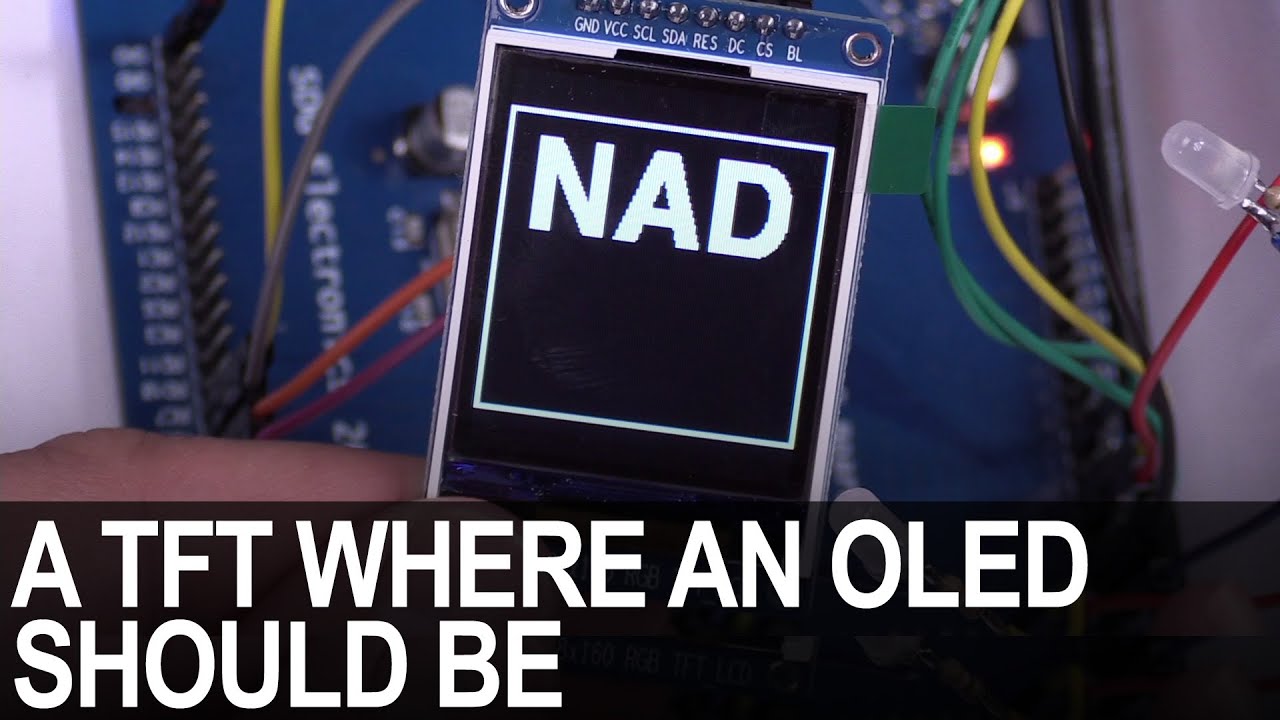
SDG #365 Reverse Engineering NAD D7050 OLED Replacement for IPS TFT
Decoding the NAD D7050's obsolete SSD1355 OLED protocol with a logic analyser, then driving an SSD1351 OLED and ST7735S IPS TFT as replacements.

SDG #360 Zero Crossing Detection and PCBWay 3D Prints
Testing PCBWay nylon PA12 and clear resin wall mounts for a Waveshare 4in ESP32-S3 touch dimmer, plus lower-power zero crossing detection options.

SDG #357 RGB Meteor Shower LEDs Build using ESP32 and WLED
Custom meteor shower Christmas lights built from WS2812 LED PCBs, ESP32 controllers running WLED, acrylic tubes and 3D printed weatherproof caps.