SDG #104 How to clean flux off your PCB. Does leaving flux on the board cause damage?
Flux residue is one of those topics where bench folklore and manufacturer datasheets rarely agree, so this episode takes a practical look at what happens when you leave it on a board and what genuinely removes it. The discussion covers the difference between rosin, water soluble and no clean chemistries, why “no clean” is a manufacturing claim about ionic contamination rather than a promise that the board will look tidy, and how the sticky, hygroscopic residues common on cheap syringe fluxes behave very differently to a properly formulated no clean gel.
A wide spread of fluxes is referenced across the test set, including popular repair shop staples such as Amtech NC-559-V2-TF, Kester no clean, MG Chemicals no clean gel, Mechanic MCN-UV80, Relife RL-421-OR and RL-422-IM, AG Termopasty TK83 and LP-1, plus a known counterfeit NC-559-ASM for comparison. That mix matters because the counterfeit and low cost pastes tend to be the ones that leave conductive or corrosive residue behind, which is exactly the scenario that causes intermittent faults, leakage across high impedance nodes and long term copper corrosion under a conformal coating.
On the cleaning side, the comparison runs through isopropyl alcohol and brush work, dedicated flux removers, and ultrasonic cleaning as the most thorough option for badly contaminated boards. The useful takeaway for a hobbyist is a decision framework rather than a single answer: low impedance digital boards with a quality no clean flux are usually fine as they are, while high impedance analogue circuits, RF sections, unknown flux origins and anything destined for a humid environment justify proper solvent or ultrasonic cleaning before the board goes back into service.
More Electronics Projects
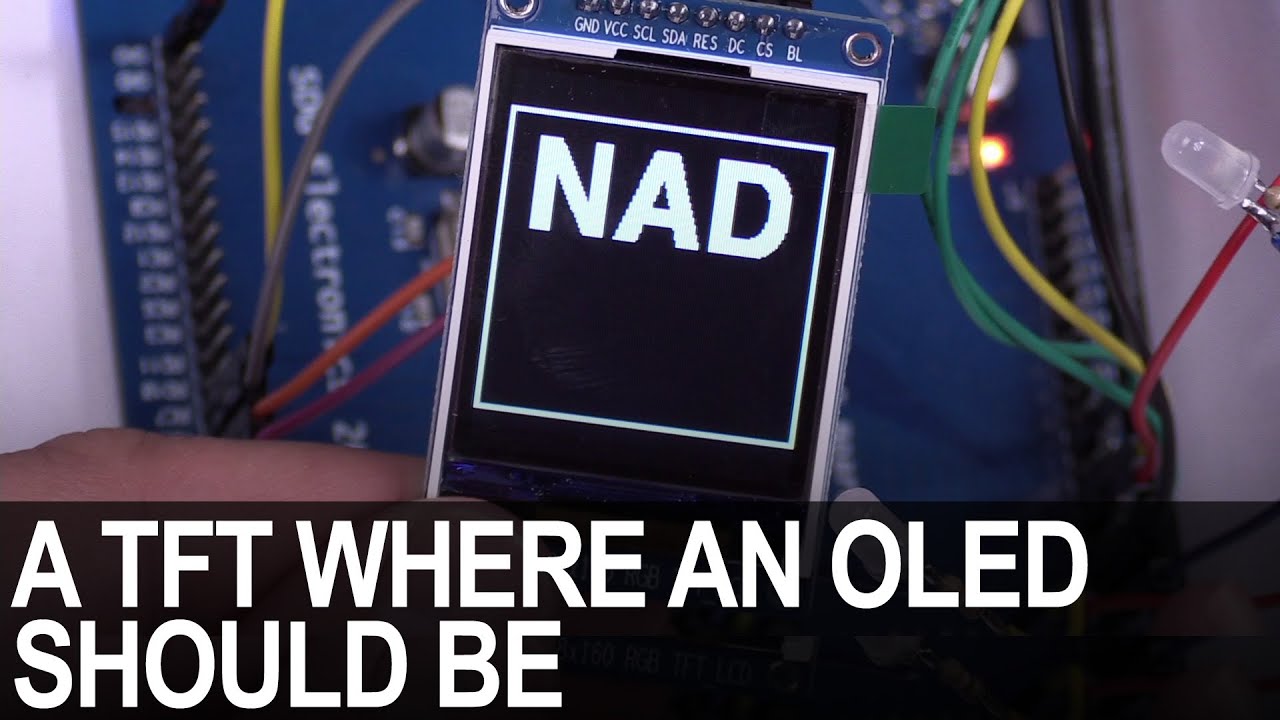
SDG #365 Reverse Engineering NAD D7050 OLED Replacement for IPS TFT
Decoding the NAD D7050's obsolete SSD1355 OLED protocol with a logic analyser, then driving an SSD1351 OLED and ST7735S IPS TFT as replacements.

SDG #360 Zero Crossing Detection and PCBWay 3D Prints
Testing PCBWay nylon PA12 and clear resin wall mounts for a Waveshare 4in ESP32-S3 touch dimmer, plus lower-power zero crossing detection options.

SDG #357 RGB Meteor Shower LEDs Build using ESP32 and WLED
Custom meteor shower Christmas lights built from WS2812 LED PCBs, ESP32 controllers running WLED, acrylic tubes and 3D printed weatherproof caps.