SDG #103 Pick and Place Service for your PCB Designs with JLCPCB
Ordering bare boards is cheap and easy, but hand-placing dozens of 0603 parts and QFN packages on every prototype gets old fast. This episode looks at what changes when you hand the placement work over to JLCPCB’s SMT assembly service, and what a designer needs to prepare before that order can even be accepted.
The practical takeaways centre on the workflow rather than the marketing. Assembly depends on the parts already sitting in the house library, so component selection has to happen at the schematic stage, not after routing is finished. Anything exotic, tall, or through-hole is likely to come back to your bench anyway. Two extra files matter as much as the Gerbers: the bill of materials and the pick and place, or centroid, file, and both need consistent designators, correct part orientation data, and origin points that match what the machine expects. Rotation errors on polarised parts such as diodes and ICs are the classic failure mode, and they are worth double-checking in the online preview before paying.
On the quality side, the interesting question for a buyer is whether machine-placed, reflowed joints are actually better than careful hand soldering under a microscope. Inspection of fine-pitch parts and passive alignment is where that gets answered, and it is also where you find out whether stencil and paste volume were sensible.
For low-volume prototyping the maths is straightforward: if a board carries a lot of repeated passives or a difficult central IC, paying for placement usually buys back hours of bench time and reduces the risk of scrapping an expensive board through a tombstoned or bridged part.
More Electronics Projects
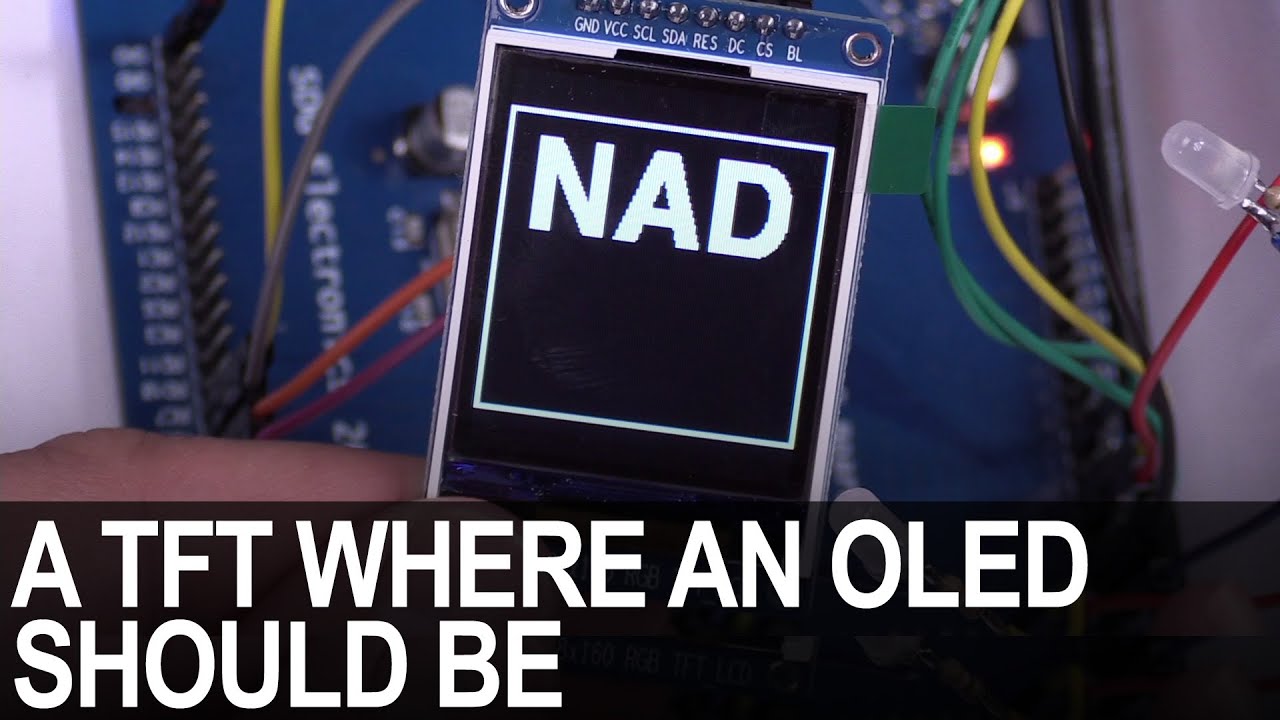
SDG #365 Reverse Engineering NAD D7050 OLED Replacement for IPS TFT
Decoding the NAD D7050's obsolete SSD1355 OLED protocol with a logic analyser, then driving an SSD1351 OLED and ST7735S IPS TFT as replacements.

SDG #360 Zero Crossing Detection and PCBWay 3D Prints
Testing PCBWay nylon PA12 and clear resin wall mounts for a Waveshare 4in ESP32-S3 touch dimmer, plus lower-power zero crossing detection options.

SDG #357 RGB Meteor Shower LEDs Build using ESP32 and WLED
Custom meteor shower Christmas lights built from WS2812 LED PCBs, ESP32 controllers running WLED, acrylic tubes and 3D printed weatherproof caps.