SDG #186 A Real Example of Microphonic Ceramic Capacitors!
Microphonic behaviour in multi layer ceramic capacitors is one of those effects that gets mentioned in datasheets and app notes but rarely demonstrated on a real board. This video does exactly that, using audio recording and probing to trace an audible whine back to specific MLCCs rather than to the usual suspects like inductors or transformers.
The underlying mechanism is piezoelectricity. Class 2 dielectrics such as X5R and X7R physically deform when a voltage is applied across them, so any AC ripple or switching waveform on a rail mechanically flexes the part. Because the capacitor is soldered to the PCB, that movement couples into the board, which acts as a sounding surface and amplifies the vibration into something you can hear. Two separate components are identified as the noise sources here, and the fix is tested rather than assumed, which is the useful part: it shows whether changing the component or its mounting actually kills the noise or just shifts its character.
There is also a worthwhile detour into what one of the mystery components on the board is actually doing, which helps explain why the noisy capacitor sees the waveform it does in the first place.
For anyone designing or repairing switching supplies, the practical takeaways are clear. Suspect ceramics when a board sings, prefer lower capacitance change dielectrics or larger case sizes where audible noise matters, keep high ripple capacitors away from flexible board areas, and remember that a mechanically quiet layout is a design choice, not luck. It is a good reminder that a capacitor is not purely electrical.
More Electronics Projects
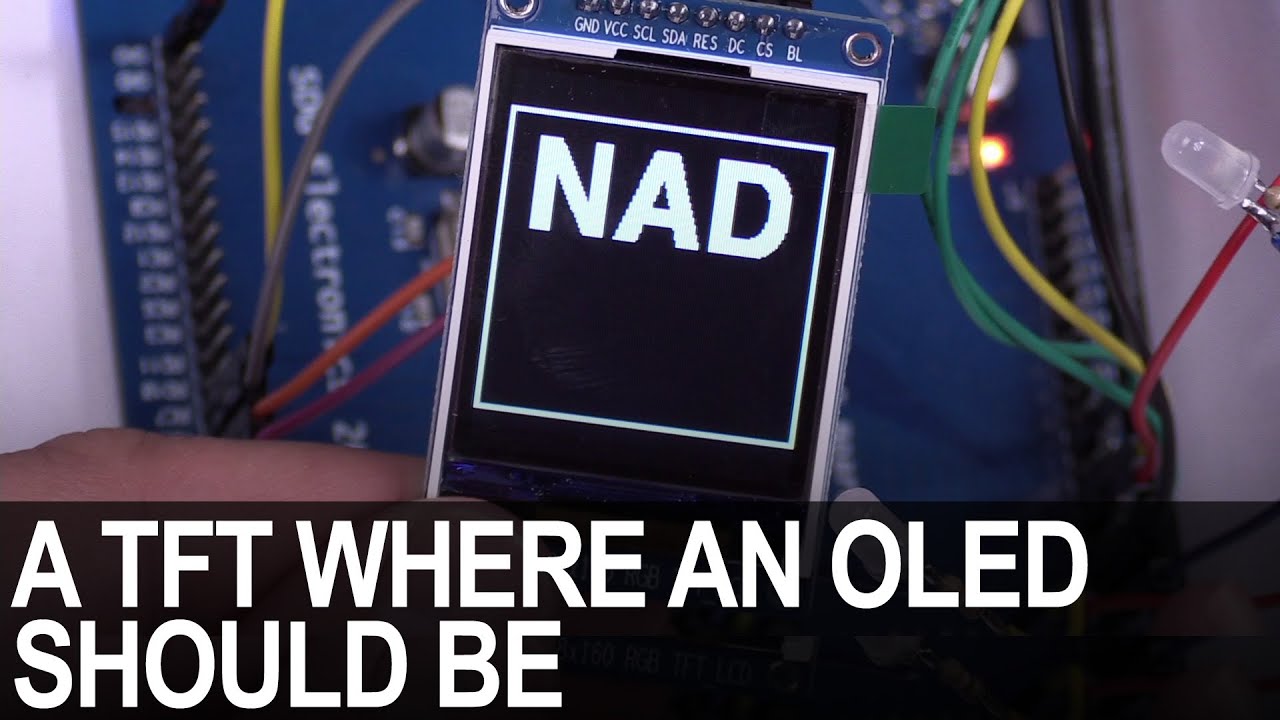
SDG #365 Reverse Engineering NAD D7050 OLED Replacement for IPS TFT
Decoding the NAD D7050's obsolete SSD1355 OLED protocol with a logic analyser, then driving an SSD1351 OLED and ST7735S IPS TFT as replacements.

SDG #360 Zero Crossing Detection and PCBWay 3D Prints
Testing PCBWay nylon PA12 and clear resin wall mounts for a Waveshare 4in ESP32-S3 touch dimmer, plus lower-power zero crossing detection options.

SDG #357 RGB Meteor Shower LEDs Build using ESP32 and WLED
Custom meteor shower Christmas lights built from WS2812 LED PCBs, ESP32 controllers running WLED, acrylic tubes and 3D printed weatherproof caps.