SDG #018 Benq LCD Monitor Repair Follow-Up
This is the conclusion to the earlier BenQ/LG TFT LCD monitor teardown, and it lands on a result that will feel familiar to anyone who repairs consumer displays: the fault was not in the obvious place. Rather than a failed backlight driver or inverter section, the culprit turned out to be an electrolytic capacitor on the smaller control PCB, compounded by a marginal solder connection on the same board that made the symptom intermittent and harder to pin down.
That combination is worth understanding because it explains why so many “dead” monitors get scrapped. A degraded capacitor with high ESR often measures acceptable resistance and even close to nominal capacitance, so a basic multimeter check passes it. Component-level ESR measurement, here with a Peak Atlas ESR70 and LCR45, is what separates a genuinely healthy part from one that has dried out. Combining that with scope work on the supply rails, using a Rigol MSO1074Z and a Fluke 87V, plus an isolation transformer for safe probing on a live mains-referenced board, is the workflow that turns guesswork into a diagnosis.
The rework side also matters. Reflowing and reseating parts on a control board without lifting pads is where a conduction station like the Metcal MX-5200 and a hot air unit such as the HCT2-120 earn their keep, particularly on thin multilayer boards with fragile connectors. The broader takeaway for anyone eyeing a similar repair: budget your time for hunting intermittent joints, not just swapping capacitors, and always re-inspect the board you assumed was fine.
More Repairs

SDG #368 Tricky Repair: Cambridge Audio Bluetone 100 - No Bluetooth
Diagnosing a Bluetone 100 that plays analogue audio but won't pair. Scope traces, EEPROM dumps and a CSR8645 to CSR8675 module swap that finally works.

SDG #363 eBay NAD Direct Digital Amplifier D 7050 Repair - Lots of issues
Repairing a faulty eBay NAD D 7050 digital amplifier: cracked SMPS transformer, dead caps, blown OLED boost converter and a burnt out white LED.
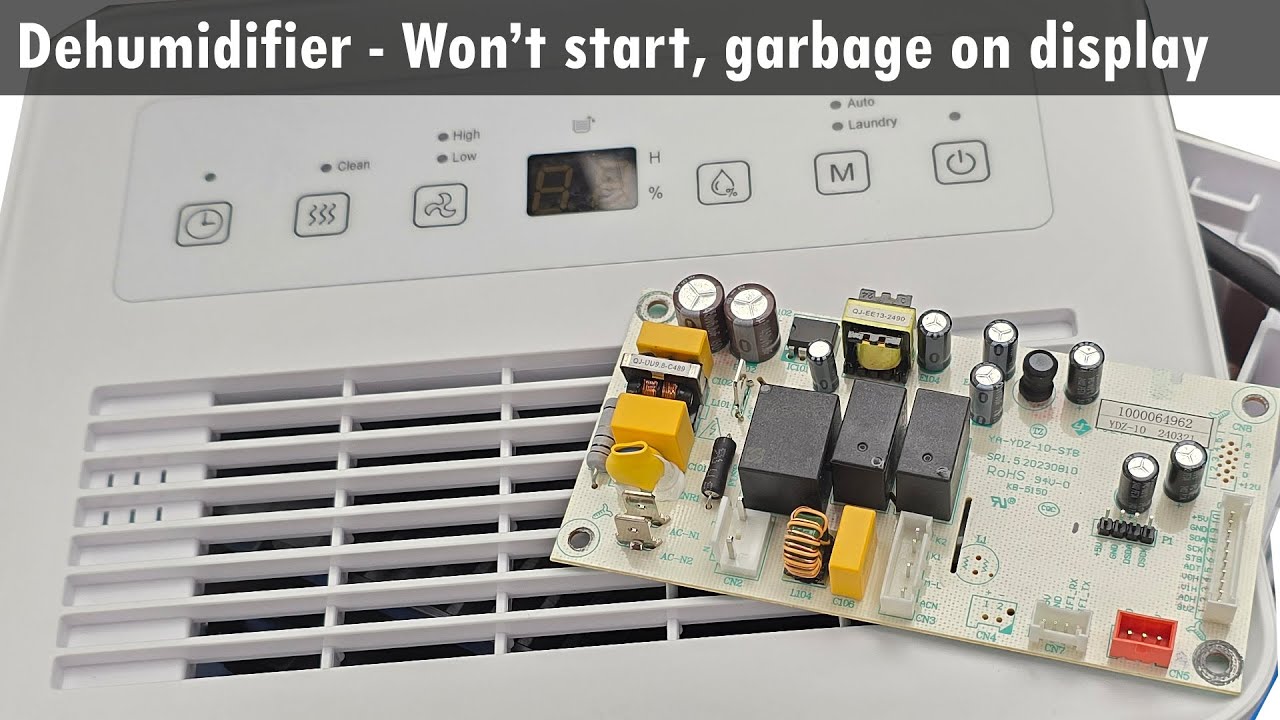
SDG #356 Repair of an Amazon Return Shinco Dehumidifier SDL5-10D
A faulty Shinco SDL5-10D dehumidifier bought for £5 as a customer return, diagnosed and fixed: blown display driver IC and an open-circuit resistor.