SDG #275 Pinecil V2 PINE64 Open Source Soldering Iron - Test with PCBs from JLCPCB
The Pinecil V2 is PINE64’s second-generation portable soldering iron, and the appeal here is not raw power but openness. Both the hardware design and the IronOS firmware running on it are open source, which means firmware updates, community feature requests and long-term support are far less dependent on a single vendor than they are with typical AliExpress-sourced portable irons.
This review looks at the physical build first: the slim handle, the tip retention arrangement, the DC barrel jack and USB-C Power Delivery inputs, and how the choice of power supply directly determines the heating performance you actually get. Voltage matters more than most buyers expect with these small irons, so a PD supply capable of 20V will behave very differently from a low-wattage adapter or an 12V DC brick.
The IronOS menu system is walked through in detail, including the button-driven navigation, temperature presets, sleep and motion detection behaviour, and the tip temperature calibration routine, which is worth running before trusting the displayed number. Calibration and cold junction compensation are areas where cheap irons often quietly disappoint.
Soldering tests are carried out on real boards rather than scrap, covering through-hole joints and larger thermal masses to see how quickly the tip recovers under load. That is the honest measure of whether a compact iron can serve as a main bench tool or is better treated as a travel and field repair iron.
For buyers weighing the Pinecil V2 against the TS101 and TS100, the deciding factors come down to firmware freedom, tip availability and cost per performance, all of which are addressed in the conclusions.
More Soldering Iron Reviews

SDG #373 Ultimate Precision Soldering Setup – Metcal Micro-Fine Iron & Tweezers + PCBWay PCBs
Hands-on with Metcal's MX-H9 micro-fine soldering iron and MX-H10 tweezers: cartridge range, microscope ergonomics, 01005 rework and JBC comparisons.
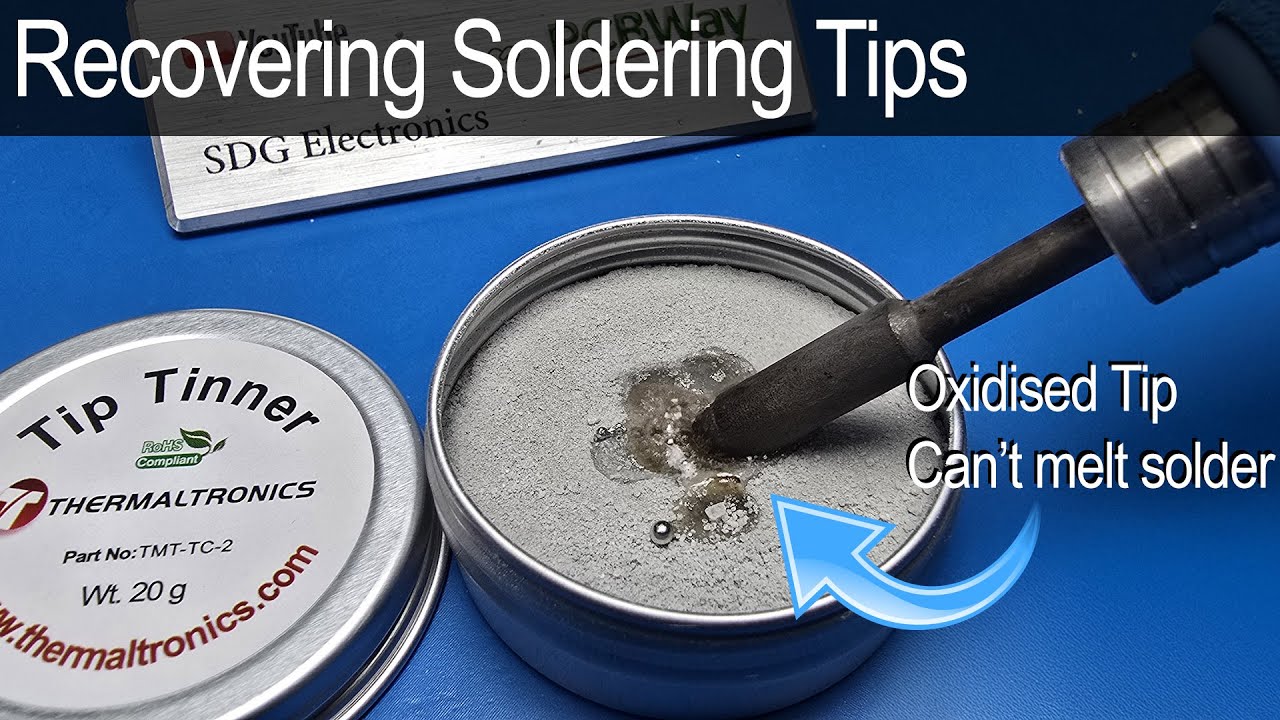
SDG #372 Solder Not Melting? Here’s Why (and How to Fix Your Iron Tip)
Damp sponge, brass wool, JBC Inox wool, rosin, tip tinner and sal ammoniac tested on badly oxidized soldering tips. See what actually works.

SDG #371 Geeboon HC24 Low Cost High Power Soldering System for JBC handpieces.
Testing the Geeboon HC24 SMPS soldering station with T470, T245 and T115 JBC handpieces: teardown, calibration, tip leakage, firmware fix and fan noise.