SDG #291 Capacitive Dropper AC-DC Power Supply with Supercapacitor
This build log takes a capacitive dropper mains supply from bare prototype PCB to a working power source for a LoRa transmitter node, and the measurements are more interesting than the circuit itself. The board is assembled in blue with a HASL finish, and one useful fabrication note comes early: text rendered in copper and revealed through the solder mask is far more durable than silkscreen, which matters for anything that will be handled or cleaned with solvents.
The first power-up exposes a classic capacitive dropper mistake. A 1.5uF dropper capacitor pushes roughly 108mA through the zener, dissipating over half a watt and lighting up on the thermal camera. Swapping to 0.68uF halves the current draw to around 50mA and settles the zener near 57C, with mains consumption dropping to about 0.53W.
The key lesson for anyone considering this topology is that load current does not change input current. Adding a 120 ohm resistor on the 5.1V rail simply diverts current that the zener was previously shunting, so the supply draws the same power whether the node is idle or transmitting. Measured power factor sits at 0.04 regardless of DC load, which is about as bad as it gets.
Without energy storage, a LoRa transmission collapses the rail and browns out the module. A 0.47F supercapacitor solves it convincingly, with the rail dipping only to roughly 4.8V across several back to back transmissions, suggesting a smaller and cheaper part would suffice. Total BOM lands around four to five units of currency, with a fuse and MOV suggested as sensible additions.
More Electronics Projects
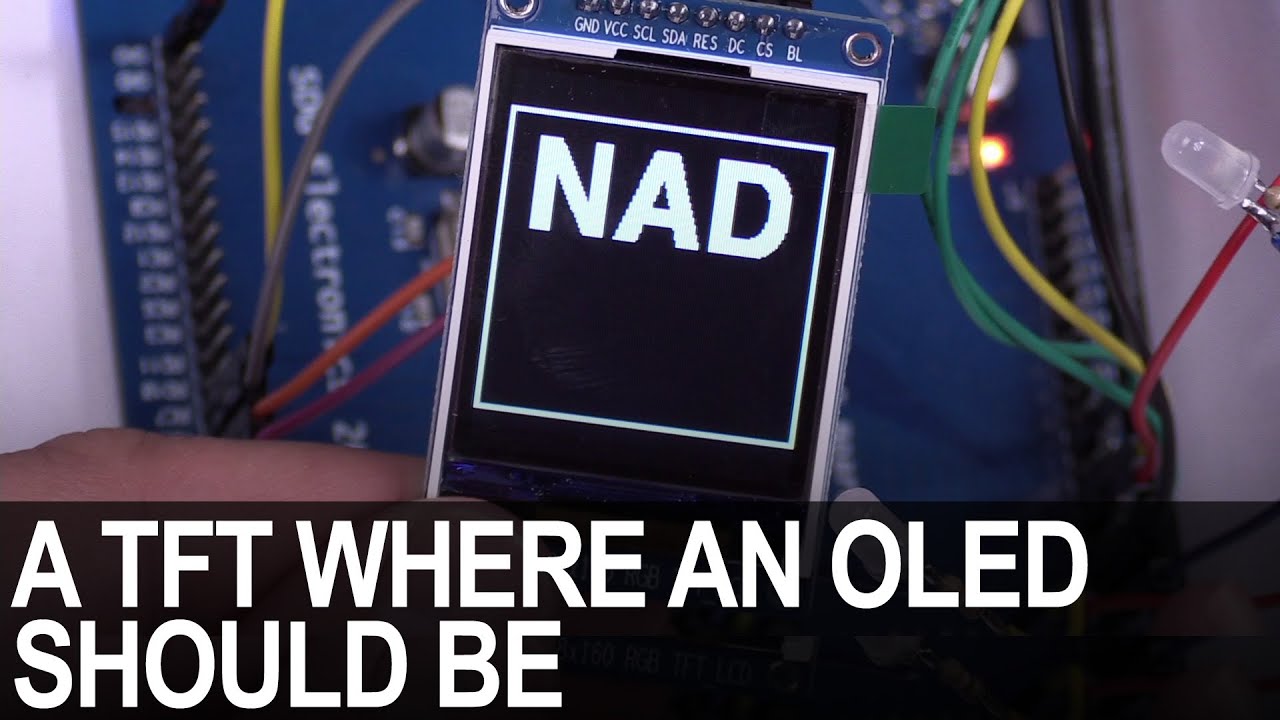
SDG #365 Reverse Engineering NAD D7050 OLED Replacement for IPS TFT
Decoding the NAD D7050's obsolete SSD1355 OLED protocol with a logic analyser, then driving an SSD1351 OLED and ST7735S IPS TFT as replacements.

SDG #360 Zero Crossing Detection and PCBWay 3D Prints
Testing PCBWay nylon PA12 and clear resin wall mounts for a Waveshare 4in ESP32-S3 touch dimmer, plus lower-power zero crossing detection options.

SDG #357 RGB Meteor Shower LEDs Build using ESP32 and WLED
Custom meteor shower Christmas lights built from WS2812 LED PCBs, ESP32 controllers running WLED, acrylic tubes and 3D printed weatherproof caps.